May 7, 2026
beauty technology

What exactly is graphene, and does it really benefit your skin?

What Is Graphene? Graphene has rapidly become one of the most talked-about advanced materials in modern science and technology. Often referred to as a “revolutionary material of the 21st century,” it is already being explored across industries—from electronics to skincare. But what exactly is graphene, and does it really benefit your skin?

What Is Graphene?

Graphene is a single layer of carbon atoms arranged in a two-dimensional honeycomb lattice. It is the thinnest known material, yet also one of the strongest and most conductive.

Its discovery earned Andre Geim and Konstantin Novoselov the Nobel Prize in Physics in 2010, highlighting its groundbreaking importance.

Key Properties of Graphene

Graphene’s unique structure gives it extraordinary physical and chemical properties:

  • Ultra-lightweight: Just 4 grams can cover a football field
  • Extremely thin: ~0.335 nm (about 1/200,000 the thickness of a human hair)
  • Super strong: ~200× stronger than steel
  • High thermal conductivity: Up to 5300 W/m·K
  • Highly transparent: ~97.7% light transmittance
  • Excellent electrical conductivity: Extremely low resistivity

These properties are why graphene is widely studied in fields such as electronics, energy storage, and biomedical engineering.

What Is a Graphene Heating Film?

Graphene heating films are thin, flexible layers that generate heat when powered. They are increasingly used in wearable technology and beauty devices.
Key Features:

  • Fast heating (can reach ~35°C in seconds)
  • Even heat distribution
  • Low-voltage operation (as low as 3.7V)
  • Flexible, lightweight, and transparent
  • Long lifespan

Far-Infrared Radiation: How It Works

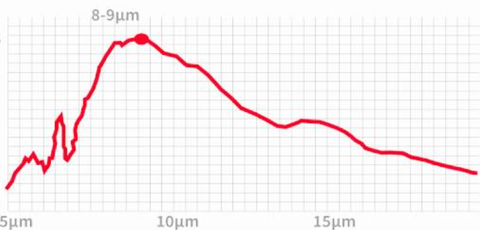
When graphene heating films are activated, they emit far-infrared radiation (FIR) in the wavelength range of 6–14 μm.

This range overlaps with the natural infrared radiation emitted by the human body and is widely studied in **biomedical engineering and thermal therapy applications.

Why This Matters:

  • FIR can penetrate skin and subcutaneous tissue more effectively than visible light
  • It may promote blood circulation and heat absorption
  • Often used in wellness and recovery devices

What Are Graphene Face Masks?

Graphene face masks are an emerging category of beauty devices that integrate graphene heating elements into wearable masks.

They aim to combine:

  • Controlled heat
  • Far-infrared energy
  • Comfortable, flexible materials

Potential Benefits of Graphene Face Masks

1. Thermal Skin Stimulation

Gentle heat may help:

  • Open pores
  • Improve circulation
  • Enhance skincare absorption

2. Conductivity & Microcurrent Potential

Graphene’s conductivity is sometimes used in devices designed to:

  • Support microcurrent delivery
  • Potentially stimulate collagen-related processes

(Note: This effect depends heavily on device design, not graphene alone.)

3. Antibacterial Properties

Some laboratory studies suggest graphene-based materials may exhibit antibacterial activity, which could help:

  • Reduce acne-causing bacteria
  • Support skin hygiene

4. Comfort and Fit

Graphene materials are:

  • Flexible
  • Lightweight
  • Adaptable to facial contours

This improves user comfort compared to rigid masks.

Do Graphene Face Masks Really Work?

This is one of the most searched questions on Google—and the honest answer is:

Partially promising, but not fully proven.

  • Heat-based skincare benefits are well understood
  • Far-infrared therapy is used in wellness devices
  • However, direct clinical evidence specific to graphene masks is still limited

In other words:
👉 The mechanism is plausible
👉 But product effectiveness depends on design and quality

Are Graphene Face Masks Safe?

Safety is another major concern for consumers.

What Research Says:

  • Graphene is generally stable in solid form
  • Concerns mainly relate to inhalation of nanoparticles, not wearable films
  • Safety depends on manufacturing quality and encapsulation

What to Check:

  • Certifications (CE, RoHS, FCC, etc.)
  • Skin-contact safety testing
  • Reputable manufacturer

Who Should Use Graphene Masks?

Graphene masks may be suitable for:

  • Users seeking warming facial treatments
  • Beauty device enthusiasts
  • Professional spa or clinic environments

However, they may not be ideal for:

  • Highly sensitive skin
  • Individuals with skin conditions (consult a dermatologist first)

Final Thoughts: Hype vs Reality

Graphene is undeniably a high-potential material, but in skincare:

  • It is not a miracle ingredient
  • Its benefits come mainly from heat + FIR + device engineering
  • Product quality matters far more than the material name alone

Expert Tip

Before choosing a graphene beauty device:

  • Look beyond marketing claims
  • Focus on technology integration, safety certifications, and real testing data
  • “Based on research in nanomaterials and biomedical engineering”
  • References to:
    • Nature Publishing Group
    • American Chemical Society
